Advertising Disclosure: This site may earn a commission when you buy through our links, at no extra cost to you. How we rate

Best Apps to Learn Spanish for Travel (2026)
Order lunch, ask which train to take, or chat with your host. Compare Spanish apps for the conversations you’ll have on your trip, with lessons you can start before you pack.

Practice Spanish Before You Go
From $19.95/mo
Visit Site Our Best Choice
Spanish for Your Next Trip
From $8.07/mo
Visit Site
Rehearse Travel Talk with a Tutor
From $3 per lesson
Visit SiteCompado Score9.6ExcellentSpanish for Your Next Trip
Babbel — Spanish for Your Next Trip
- Travel lessons with everyday dialogues
- Pronunciation feedback as you speakPronunciation feedback as you speak
- Download lessons before your flight
Compado Score9.4GreatPractice Spanish Before You Go
Pimsleur — Practice Spanish Before You Go
- 30-minute lessons focused on speaking
- Hands-free audio for practice on the go
- Download audio lessons for offline use
Compado Score9.1GreatRehearse Travel Talk with a Tutor
Preply — Rehearse Travel Talk with a Tutor
- Private Spanish lessons with a tutor
- Lessons tailored to your travel goals
- Filter tutors by country and availability
 Compado Score8.6Very good
Spanish for Travel and Everyday Life
Busuu — Spanish for Travel and Everyday Life
- Spanish lessons for everyday situations
- Community feedback on your exercises
- Offline lessons with Premium
 Compado Score8.2Very good
Tune Your Ear to Spoken Spanish
Yabla — Tune Your Ear to Spoken Spanish
- Native-speaker videos with dual subtitles
- Scribe dictation for listening practice
- Save words from videos to flashcards
 Compado Score7.9Good
Learn Through Pictures and Sound
Rosetta Stone — Learn Through Pictures and Sound
- Learn Spanish through images and audio
- Practice pronunciation with TruAccent
- Phrasebook for Latin American Spanish
A Closer Look at Spanish Apps for Travel
A memorized question only gets you halfway: you also need to understand the answer. Before a trip, practice both sides of everyday exchanges—asking for a table, checking a departure time or explaining where you’re staying. Here’s how each app can help you prepare, and where you may need extra practice.
The scores below cover course structure, speaking practice, value and ease of use. For travel, pay particular attention to whether you’ll practice listening and answering aloud, rather than only recognizing words on a screen.
What to Look for Before Your Trip
- Curriculum Structure: whether lessons give you a clear starting point and help you put useful sentences together.
- Speaking Practice: whether you answer aloud, practice pronunciation or speak with another person.
- Value for Money: the total subscription cost, including what you’ll pay if it renews after your trip.
- Ease of Use: how easily you can pick up a lesson during a busy week of trip planning.
Start with the Trip You’re Taking
- First trip with little Spanish — focus on greetings, numbers, polite requests and understanding simple replies.
- Departure coming up soon — prioritize situations you’ll actually face instead of rushing through a whole course.
- Heading to Spain or Latin America — listen to speakers from your destination so unfamiliar accents feel less surprising.
Our Top 3 Spanish Apps at a Glance
“A useful starting point for building your own sentences before a trip. Live conversation needs separate practice.”
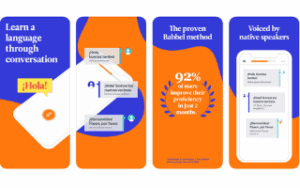
- Short lessons you can fit around trip planning
- Native-speaker audio and pronunciation feedback
- Grammar explanations that help you change a phrase
- No live tutoring option built into the app
- Two Spanish courses: European (to C1) or Mexican (to B1)
Babbel suits travelers who want to do more than recite a phrasebook. Its short lessons combine dialogue, grammar explanations and pronunciation practice, helping you understand how to change a sentence when your plans change. Work through a lesson before breakfast, then say a few useful questions aloud without looking at the screen.
Babbel Speak offers AI conversation practice in the mobile app. With US English as the display language, it supports Mexican Spanish. The feature is currently in beta. Structured exercises are still more predictable than a conversation at a busy station. If answering unexpected questions is your main worry, add conversation practice with a tutor. Live teaching is not included in the app subscription described here.
Best for
Travelers starting from the basics
Follow the course in order to build a foundation before trying to manage several unfamiliar situations at once.
Travelers who want to change a memorized phrase
Grammar explanations help you see how a sentence works, so you can practice changing the person, place or request.
Not for
Travelers looking for a full free trial
There’s no timed free trial — only the first lesson is free, though a 14-day money-back guarantee applies.
Travelers who mainly need live conversation
Live classes with a teacher aren’t included in the app subscription — you’ll need a separate tutor for that.
Babbel FAQ
Is there a free trial for Babbel?
Not a timed one — the first lesson of each course is free, and Babbel offers a 14-day money-back guarantee that you request from customer service.
Can I fit Babbel into my pre-trip routine?
Most lessons take 10–15 minutes. Set aside a regular slot before your trip, then spend a little extra time saying the phrases you expect to use.
Does Babbel teach Latin American or Spain Spanish?
Both — Babbel has a European Spanish course (up to C1) and a separate Mexican Spanish course (up to B1).
“Practice hearing a question and answering aloud before you need to do it abroad. Add reading practice for signs and menus.”
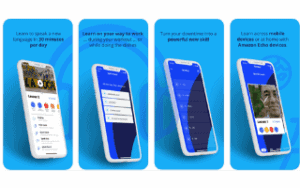
- Audio prompts encourage you to answer aloud
- Hands-free lessons fit into pre-trip routines
- Voice Coach gives AI pronunciation feedback
- Phonetic reading lessons, but no writing practice
- No live practice with another person
On a trip, you won’t always have time to read a translation before replying. Pimsleur’s audio lessons get you into the habit of listening, pausing and answering aloud. A regular session before departure can give you more practice retrieving words, rather than simply recognizing them in a multiple-choice exercise.
Allow about 30 minutes for a core lesson and find somewhere you can speak comfortably. Voice Coach pronunciation feedback is a Premium feature; downloaded audio lessons are available offline in the mobile app. The audio focus is useful preparation for spoken exchanges; add reading practice if understanding menus, signs and booking messages matters just as much to you.
Best for
Travelers who prefer listening to screen time
Use the core audio lessons during your usual routine before departure, somewhere you can safely listen and respond.
Travelers hesitant to speak aloud
Repeated spoken responses and Voice Coach pronunciation feedback give you a way to practice before speaking to strangers.
Not for
Travelers focused on signs and written messages
The method is audio-first, so written practice takes a back seat compared to Babbel or Busuu.
Travelers wanting unscripted conversation
Practice is with recorded audio and AI tools, not a live tutor.
Pimsleur FAQ
How much does Pimsleur cost?
$19.95/month for Spanish (Premium); an All Access plan with all 51 languages is also available. Both start with a 7-day free trial.
How should I use Pimsleur before a trip?
Plan for about 30 minutes per core lesson and answer the prompts aloud. Leave time for reading practice too, especially for transport information and menus.
Can I learn Latin American Spanish with Pimsleur?
Yes — the main Spanish course is Latin American, and a separate Spain (Castilian) course is also available.
“Bring your itinerary and practice the conversations you’re worried about. Choose your tutor carefully and agree on a plan.”

- Real 1-on-1 tutors, not a fixed curriculum
- Flexible scheduling and a wide range of price points
- Wide choice of Spanish dialects and native-speaker accents
- Costs add up faster than a flat-rate app
- Quality varies by tutor — plan to try a few before settling
A tutor can ask the follow-up question you didn’t prepare for. With Preply, tell a prospective tutor where you’re going, your level and the situations you want to rehearse. You could ask to practice checking into accommodation, changing a ticket or chatting with a host; agree on the lesson focus before booking.
The experience depends on the tutor you choose, and regular lessons can cost more than a self-study subscription. Use the trial to check whether the tutor gives you enough speaking time and corrections you understand. Check availability against your departure date before committing.
Best for
Travelers who freeze when a conversation changes
Ask your tutor to vary the questions and give you time to respond, rather than memorizing one fixed exchange.
Travelers preparing for a particular destination
Look for a tutor from the country you’re visiting and ask about expressions you may hear there.
Not for
Travelers keeping study costs predictable
Per-lesson pricing means your monthly cost varies and can exceed a flat-rate app if you take more lessons.
Travelers who need entirely self-paced study
You’re responsible for booking, rescheduling, and canceling at least 12 hours ahead.
Preply FAQ
How much do Preply lessons cost?
Each tutor sets their own rate, typically $3–$40+ per lesson, and your trial lesson is currently 50% off.
Can I switch tutors if the first one isn’t a fit?
Yes — if a paid trial didn’t meet your expectations, you can request a free replacement trial with another tutor (up to 2 per account).
Can I choose a tutor who speaks a specific Spanish dialect?
Yes — with 15,000+ Spanish tutors, you can filter by country, so you can specifically look for Latin American or Castilian native speakers.
Choose an App Around Your Itinerary
Write down three conversations you expect to have: perhaps collecting a rental car, ordering a meal and asking your host about the neighborhood. Practice asking your question and hearing a possible reply. Then add numbers, times and a polite way to ask someone to repeat themselves. Choose an app that lets you practice the part you find hardest.
What Do You Most Want to Practice?
For a short daily course before departure, Babbel combines lessons with grammar explanations so you can work on building sentences. Pimsleur gives you audio prompts to answer aloud when you want less screen time. If unexpected replies are your main concern, Preply lets you find a tutor and agree on travel situations to practice together.
The other three options suit different kinds of preparation. Consider how much Spanish you already know and what you’ll keep using after your trip.
Busuu combines a self-paced course with community feedback. Use it to build everyday Spanish before departure; check which speaking tools your plan includes, as AI conversation practice is listed under Premium Plus.
“Build everyday Spanish at your own pace, with community feedback. Check the plan before choosing it for speaking tools.”
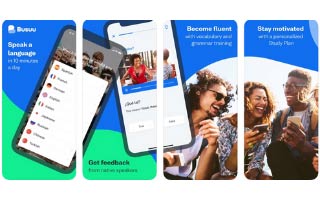
- AI conversations and pronunciation practice (Premium Plus)
- Offline mode and an ad-free experience
- Busuu certificates to track your progress
- No live tutors included in the plan
- Best price requires a 12-month commitment
Yabla can help when you know some Spanish but struggle to follow it at normal speed. Use its videos and dictation practice to work on hearing where one word ends and the next begins—a useful skill when replies abroad sound faster than your lessons. Flashcards are available on the website according to Yabla’s FAQ; app features may differ.
“Work on understanding native speech before you arrive. Video practice complements a course; it doesn’t replace real conversation.”
- 3,800+ authentic videos with 100% native speakers
- Speak™ pronunciation and Scribe™ dictation tools
- 7-day free trial plus 1 free private class
- Lighter on structured grammar teaching
- Private classes only on Gold or Platinum plans
Rosetta Stone uses pictures, spoken Spanish and pronunciation feedback rather than relying on English explanations. It may suit you if visual practice helps words stick. Its Phrasebook lets you listen to common expressions and practice saying them with TruAccent. Phrasebook is available for Latin American Spanish. For a trip coming up soon, also rehearse the specific questions you expect to ask.
“Learn through pictures and spoken Spanish. Add itinerary-specific phrases if your departure is close.”
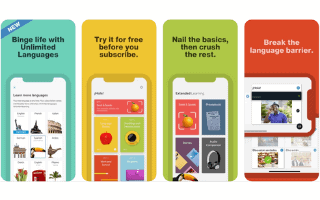
- Immersion method — learn in Spanish with minimal translation
- TruAccent speech recognition for pronunciation
- Phrasebook for Latin American Spanish
- Lighter on grammar explanations
- Best price needs the yearly plan
Spanish for Travel: Your Questions
Which Spanish phrases should I learn before a trip?
Start with greetings, polite requests, numbers, times and asking for help. Practice “¿Puede repetir, por favor?” (Could you repeat that, please?) as well as your opening question. Add phrases for your own plans: checking in, buying tickets or asking about ingredients. For allergies or medical needs, carry reliable written information rather than relying on a phrase you’ve just learned.
Can I learn Spanish for travel as a beginner?
Yes, but set a manageable goal: handling a few everyday exchanges, rather than becoming fluent before departure. Practice a little each day and say your answers aloud. Knowing how to greet someone, ask a simple question and request a slower reply is a useful place to start.
Do these apps teach Latin American or Spain Spanish?
Babbel has separate European and Mexican Spanish courses, Busuu has separate Spain and Latin American Spanish courses, Rosetta Stone includes both Spain and Latin America Spanish in one subscription, and Pimsleur offers a Latin American course plus a separate Castilian one. Yabla lets you filter videos by country, and Preply lets you filter tutors by country, so you can practice the specific dialect you need.
How much do Spanish learning apps cost?
Busuu Premium works out to $6.08/month on its 12-month plan, Babbel to $8.07/month on its 12-month plan, and Yabla’s basic plan is $9/month billed yearly. Busuu also has a free basic plan. Yabla also offers a 7-day free trial plus a free private class if you want to try before paying.
Do I need a tutor before traveling?
Not necessarily. A self-paced app can give you a regular way to practice before departure. A tutor is worth considering if you want to rehearse a particular conversation or find it difficult to answer without a script. Explain your travel plans first and ask how the tutor would use the lesson time.