Advertising Disclosure: This site may earn a commission when you buy through our links, at no extra cost to you. How we rate
Babbel vs Rosetta Stone, Pimsleur & More:
Which Is Better? (2026)
Wondering whether Babbel is better than Rosetta Stone, Pimsleur, Busuu, or Preply? We compared them side by side on teaching method, speaking practice, and what you actually pay in the US, so you can pick the one that fits how you learn.

Learn to Speak on the Go
From $19.95/mo
Start Learning Our Best Choice
Speak a New Language Confidently
From $8.07/mo
Start Learning
Private Language Tutors Online
From $3 per lesson
Start LearningCompado Score9.6ExcellentSpeak a New Language Confidently
Babbel — Speak a New Language Confidently
- Short lessons that fit your schedule and get you talking fast
- Interactive dialogues, podcasts and grammar tips all in one appDialogues, podcasts and grammar tips
- 25M+ subscriptions, courses by 200+ experts
Compado Score9.4GreatLearn to Speak on the Go
Pimsleur — Learn to Speak on the Go
- Start speaking after your very first lesson
- 30-minute audio lessons for your commute
- Hands-free with CarPlay & Android Auto
Compado Score9.1GreatPrivate Language Tutors Online
Preply — Private Language Tutors Online
- 1-on-1 lessons with a tutor you choose
- Find a tutor to match your language, goals and budget
- Lessons in a built-in virtual classroom
 Compado Score8.6Very good
Build Real Speaking Fluency
Busuu — Build Real Speaking Fluency
- Earn Busuu certificates as you progress
- Ad-free, with grammar review tools
- Skip ahead past lessons you already know
 Compado Score8.2Very good
Learn with Authentic Videos
Yabla — Learn with Authentic Videos
- Learn with authentic native-speaker videos
- Daily 10-min Fluency Club + dictation
- Smart flashcards with spaced repetition
 Compado Score7.9Good
Learn Through Immersion
Rosetta Stone — Learn Through Immersion
- Immersion method, minimal translation
- Create your own lessons on any topic
- All 25 languages in one subscription
Babbel vs Pimsleur vs Preply: A Closer Look at the Top 3
The six apps above offer different ways to learn a language, but they get there in very different ways — a self-paced grammar course, an audio method built for listening and repeating, and 1-on-1 tutoring aren’t really competing on the same axis. This section breaks down the top 3 in more depth: what each one actually costs once the intro offer ends, how the curriculum is structured, and who each one genuinely suits.
Our scores are based on the same four criteria across every provider, checked against each provider’s current published pricing and terms as of October 2026.
The Scoring Criteria, Defined
- Curriculum Structure: how clearly the course is sequenced from beginner to advanced, and whether grammar is explained or just drilled.
- Speaking Practice: how much of the method actually gets you speaking your chosen language out loud, versus reading or listening passively.
- Value for Money: what you get at the renewal price, not just the introductory offer.
- Ease of Use: how quickly a new user can start a lesson and understand what to do next.
Who Should Read This Section
- Complete beginners deciding between a structured app and 1-on-1 tutoring.
- Budget-conscious learners who want to know exactly what the renewal price looks like before committing.
- Anyone comparing Babbel with another language app before choosing a plan.
Our Top 3 Language Apps at a Glance
“The most structured app on the list: steady grammar progress, but add a tutor for real conversation.”
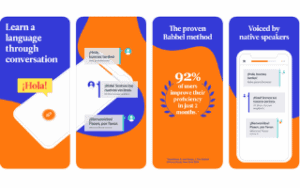
- Customized learning plans based on your skills and goals
- Native-speaker audio with strong speech-recognition feedback
- Clear, intuitive grammar tips in every lesson
- No live tutoring option built into the app
- Available course levels vary by language
Babbel earns the top spot because it’s the most consistently structured course on this list: every lesson builds on the last, grammar is explained rather than left for you to infer, and the 10–15 minute format makes it easy to actually stick with. Native-speaker audio and speech recognition mean you’re practicing real pronunciation from the first lesson, not just reading translations.
The honest trade-off is that the Babbel app subscription is self-study — live classes with a teacher aren’t included, so learners who want live conversation practice will eventually want to pair it with a tutor, or start with Preply instead.
Best for
Complete beginners who want structure
Courses are sequenced from beginner to advanced and aligned with CEFR levels, so you always know what comes next.
People who want grammar explained, not just drilled
Each lesson breaks down why a phrase works the way it does, rather than relying on pure repetition.
Not for
Learners looking for an extended free trial
There’s no timed free trial — only the first lesson is free, though a 14-day money-back guarantee applies.
Learners who most want live conversation
Live classes with a teacher aren’t included in the app subscription — you’ll need a separate tutor for that.
Babbel FAQ
Is there a free trial for Babbel?
Not a timed one — the first lesson of each course is free, and Babbel offers a 14-day money-back guarantee that you request from customer service.
How long are Babbel lessons?
Most lessons run 10–15 minutes, which is short enough to fit into a daily routine without feeling like a chore.
Is Babbel or Pimsleur better for my learning style?
Babbel suits learners who want short, structured lessons with grammar explanations. Pimsleur focuses on listening and speaking through audio lessons, making it a useful option for hands-free study.
“The strongest pick for pronunciation and listening on the go. Add reading practice to go further.”
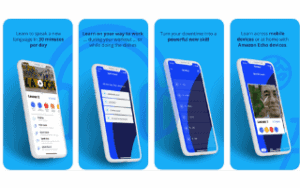
- Speak-first audio method gets you talking from lesson one
- Fully hands-free — works well on a commute or during chores
- Voice Coach gives AI pronunciation feedback
- Phonetic reading lessons, but no writing practice
- No live practice with another person
Pimsleur’s whole method is built around one idea: you learn to speak by speaking, out loud, from the very first lesson. There’s no screen to stare at and no vocabulary list to memorize first — you just listen and respond, which makes it genuinely usable while driving, walking, or doing chores. Voice Coach adds AI pronunciation feedback on top of that, which is rare for an audio-first method.
The trade-off is that it’s light on reading and writing — if you want to text or read in your new language as well as speak it, you’ll want to add a second resource alongside Pimsleur eventually.
Best for
Commuters and drivers who want hands-free study
The core conversational lessons work fully through audio — no need to look at a screen.
Learners chasing natural pronunciation
The speak-first method and new Voice Coach feature are both built specifically around accent and pronunciation.
Not for
Anyone who wants to read or write their new language early on
The method is audio-first, so written practice takes a back seat compared to Babbel or Busuu.
People who want live conversation with a person
Practice is with recorded audio and AI tools, not a live tutor.
Pimsleur FAQ
How much does Pimsleur cost?
$19.95/month for one language (Premium); an All Access plan with all 51 languages is also available. Both start with a 7-day free trial.
How long is each Pimsleur lesson?
Lessons run about 30 minutes and are designed to be completed in one sitting, ideally out loud.
How does Pimsleur compare with a tutor?
Pimsleur offers audio lessons you can follow on your own. A service like Preply offers live 1-on-1 lessons with a tutor. Choose Pimsleur for hands-free practice, or a tutor if you prefer live feedback from another person.
“A wide choice of language tutors for different budgets. Quality depends on who you pick, so use the trial.”

- Real 1-on-1 tutors, not a fixed curriculum
- Flexible scheduling and a wide range of price points
- Choose a tutor to match your language and learning goals
- Costs add up faster than a flat-rate app
- Quality varies by tutor — plan to try a few before settling
Preply is the only pick on this list built around a real person rather than a fixed course, and that’s exactly why it scores well on speaking practice and flexibility. You choose your own tutor by price, availability, and accent, and lessons adapt to whatever you actually need help with that week instead of a fixed syllabus.
The trade-off is cost and consistency: paying per lesson adds up faster than a flat monthly app, and since every tutor is different, quality depends on who you pick — plan to try a couple of tutors before settling on one.
Best for
Learners who want a real person correcting them
Every lesson is 1-on-1 with a human tutor, not a scripted app exercise.
Anyone looking for a tutor who matches their learning goals
Choose your tutor by language, price and availability to find a suitable match.
Not for
Budget learners who want one flat monthly price
Per-lesson pricing means your monthly cost varies and can exceed a flat-rate app if you take more lessons.
People who’d rather not manage a tutor’s schedule
You’re responsible for booking, rescheduling, and cancelling at least 12 hours ahead.
Preply FAQ
How much do Preply lessons cost?
Each tutor sets their own rate, typically $3–$40+ per lesson, and your trial lesson is currently 50% off.
Can I switch tutors if the first one isn’t a fit?
Yes — if a paid trial didn’t meet your expectations, you can request a free replacement trial with another tutor (up to 2 per account).
How is Preply different from Babbel?
Preply offers live 1-on-1 lessons with a tutor you choose, while Babbel is a self-paced app with a structured course. Preply suits learners who want personal feedback; Babbel suits those who prefer to study independently.
How We Compared Babbel to Other Language Apps
We looked at each platform’s teaching method (self-paced app, live tutoring, or video immersion), how the curriculum is structured across beginner-to-advanced levels, the languages and learning options it offers, and what it actually costs once trial pricing ends. Every price, trial length, and refund window above is pulled directly from each provider’s current terms and checked before publishing.
Babbel or Another App: Which Should You Choose?
If you want a structured, grammar-first course you can do in short daily sessions, Babbel is the strongest fit. For an audio-first method built around speaking out loud on the go, Pimsleur is built for commutes and hands-free practice. If you’d rather practice speaking with a real person from day one, Preply lets you pick a tutor by budget and schedule.
Beyond the top 3, three more apps are worth comparing with Babbel depending on how you like to learn.
Busuu adds community feedback from native speakers and AI speaking practice to a self-paced course — a good fit if you want structure plus regular speaking reps without booking a tutor.
“A structured course with a social twist: real people give feedback on your writing and speaking. Add a tutor for live talk.”
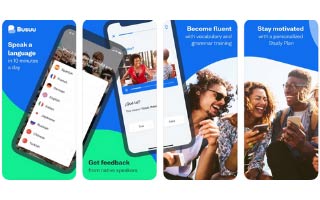
- AI conversations and pronunciation practice (Premium Plus)
- Offline mode and an ad-free experience
- Busuu certificates to track your progress
- No live tutors included in the plan
- Best price requires a 12-month commitment
Yabla is best once you already know the basics of your chosen language and want to train your ear on real, fast native speech from TV clips, interviews and music.
“The best pick for training your ear on real, fast speech. Pair it with a structured course for grammar.”
- Authentic videos featuring native speakers
- Speak™ pronunciation and Scribe™ dictation tools
- 7-day free trial plus 1 free private class
- Lighter on structured grammar teaching
- Private classes only on Gold or Platinum plans
Rosetta Stone suits learners who want full immersion with no English explanations at all, plus strong pronunciation feedback.
“The purest immersion method on the list. Great for pronunciation, lighter on grammar explanations.”
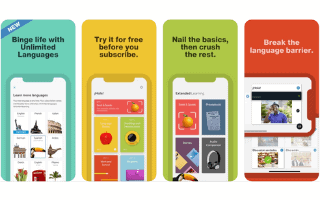
- Immersion method — learn in your chosen language with minimal translation
- TruAccent speech recognition for pronunciation
- All 25 languages in one subscription
- Lighter on grammar explanations
- Best price needs the yearly plan
Frequently Asked Questions
Which app is best for absolute beginners?
Babbel and Busuu both offer structured beginner courses with grammar support built into the lessons, which makes them the easiest entry points for someone starting from zero.
How do Babbel and Rosetta Stone differ?
Babbel focuses on short, structured lessons with grammar explanations. Rosetta Stone uses an immersion approach with minimal translation. Babbel may suit you if you prefer clear explanations, while Rosetta Stone may suit you if you prefer learning through context.
Which option is cheapest for casual learners?
Busuu Premium works out to $6.08/month on its 12-month plan, Babbel to about $8/month, and Yabla’s basic plan is $9/month billed yearly. Busuu also has a free basic plan. Yabla also offers a 7-day free trial plus a free private class if you want to try before paying.
Is a tutor better than a self-paced app for learning a language?
A tutor like Preply gets you speaking and correcting mistakes faster, but costs more per hour of study than a self-paced app. Many learners pair a structured app like Babbel or Pimsleur with occasional Preply lessons for the best of both.