Advertising Disclosure: This site may earn a commission when you buy through our links, at no extra cost to you. How we rate

Best Apps to Learn Spanish for Family & Friends (2026)
Want to talk with your partner’s parents, your abuela or friends who switch to Spanish mid-sentence? We compared six apps that help you follow along and join in.


Listen and Reply Out Loud
From $19.95/mo
Visit Site Our Best Choice
Talk with Family & Friends
From $8.07/mo
Visit Site
Tutors for Family Conversations
From $3 per lesson
Visit SiteCompado Score9.6ExcellentTalk with Family & Friends
Babbel — Talk with Family & Friends
- 10-minute lessons for everyday talk with family and friends10-min lessons for family & friends
- AI speaking practice and vocabulary for chats with loved onesAI speaking + vocab for loved ones
- Choose Mexican or Spain Spanish to match the people you knowMexican or Spain Spanish
Compado Score9.4GreatListen and Reply Out Loud
Pimsleur — Listen and Reply Out Loud
- Share one plan with up to 3 family membersShare with up to 3 family members
- Latin American course, plus a separate Spain courseLatin American and Spain courses
- 30-minute audio lessons built on spoken dialogues30-min lessons built on dialogues
Compado Score9.1GreatTutors for Family Conversations
Preply — Tutors for Family Conversations
- Filter for tutors focused on family and friendsTutors focused on family and friends
- Mexican, Colombian, Argentinian or European SpanishMexican, Argentinian or European Spanish
- Lessons built around your goals and scheduleLessons built around your goals
 Compado Score8.6Very good
Feedback from Native Speakers
Busuu — Feedback from Native Speakers
- Native speakers give feedback on your exercisesNative speakers give you feedback
- Complete Latin American Spanish course, beginner to advancedFull Latin American Spanish course
- Lessons that get you ready to chat with family and friendsReady to chat with family & friends
 Compado Score8.2Very good
Follow Real, Fast Spanish
Yabla — Follow Real, Fast Spanish
- Filter videos by country, from Mexico to ArgentinaFilter videos by country
- Slow down fast native speech, with dual subtitlesSlow down fast native speech
- Free lessons on family words, in-laws and slangFree lessons on family words and slang
 Compado Score7.9Good
Family and Home Life Units
Rosetta Stone — Family and Home Life Units
- Units on family, friends, celebrations and home lifeUnits on family, friends and home life
- Choose Latin American or Spain Spanish
- TruAccent feedback on your pronunciation
A Closer Look at Spanish Apps for Family and Friends
Talking with family isn’t like ordering in a café. Conversations jump between topics, people talk over each other, and relatives use words from their own country. We looked at how each app handles that: everyday dialogue, regional Spanish, real people to practice with, and whether you can share a plan with the people you’re learning alongside.
Our scores are based on the same four criteria across every provider, checked against each provider’s current published pricing and terms as of October 2026.
The Scoring Criteria, Defined
- Curriculum Structure: how clearly the course is sequenced from beginner to advanced, and whether grammar is explained or just drilled.
- Speaking Practice: how much of the method actually gets you producing spoken Spanish, versus reading or listening passively.
- Value for Money: what you get at the renewal price, not just the introductory offer.
- Ease of Use: how quickly a new user can start a lesson and understand what to do next.
Who Should Read This Section
- Partners of Spanish speakers getting ready for family visits and calls.
- Heritage learners who understand some Spanish but find it hard to reply.
- Friends, neighbors and community members who want to join in, not just listen.
Our Top 3 Spanish Apps at a Glance
Learning Spanish to talk with family and friends? Short lessons, Latin American or Spain Spanish, and a Group Plan if your family lives abroad.
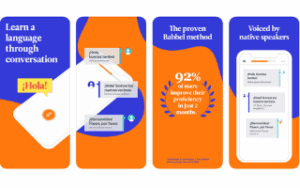
- 10-minute lessons built on real-life conversations.
- Latin American or Spain Spanish, from beginner (A1) to advanced (C1).
- Optional Group Plan: up to 6 people, each in their own language, from any country.
- No live tutor in the subscription
- Group Plan is a separate purchase from the individual offer shown
Learn the Spanish your family speaks. Babbel’s 10-minute lessons are built around real conversations — talking about family, making plans, catching up. Choose Latin American or Spain Spanish, then practice speaking with AI so you’re ready to reply, not just listen.
Family in two countries? Look at the Group Plan. If you’re in the US and your partner’s family is in Mexico or Colombia, everyone can learn together on one subscription. The Group Plan covers up to six people, and each person can pick a different language — you learn Spanish while your suegra learns English. Everyone has their own account and private progress, members can join from any country, and one person pays a single price for the whole group.
About the price: the $8.07/month offer shown on this page is for the individual plan. The Group Plan is priced separately.
Best for
Families learning different languages
You can study Spanish for visits to your partner’s family while a relative learns English for conversations with you.
Siblings and friends with different routines
There is no shared lesson schedule to keep up with. Each member chooses when to study, including friends and relatives living abroad.
Not for
Families learning with young children
Babbel says its courses are designed for adults and aren’t suitable for young children.
Learners who most want live conversation
Live classes with a teacher aren’t included in the app subscription — you’ll need a separate tutor for that.
Babbel FAQ
Can we use one subscription without sharing a login?
Yes. With the Group Plan, one person manages the subscription and invites up to five others by email. Everyone signs in to their own Babbel account.
Can I learn Spanish while my grandmother learns English?
Yes. Members choose their own language and follow their own lessons. You do not need to study the same subject or be at the same level.
Can a friend or relative in Spain join my plan?
Yes. Members do not have to live together or be in the same country. A friend or relative abroad can accept your invitation and learn through their own account.
Will my family see my mistakes or progress?
Your learning activity stays private. The person managing the plan can see your name and email address, but not your progress or streaks. You decide what to share with each other.
Does the $8.07/month offer cover the whole family?
No. That is the individual-plan offer displayed on this page. To include other people, choose the separate Group Plan and check its current price and billing terms.
“Trains you to understand and answer out loud, and one plan can be shared with family. Light on reading and writing.”
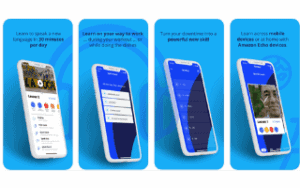
- Lessons built around spoken dialogues you answer out loud
- Share Premium with up to 3 family members, each tracked separately
- Latin American course, plus a separate Spain (Castilian) course
- Less focus on reading and writing
- No live practice with another person
Pimsleur is built around listening and answering out loud. Each lesson, about 30 minutes, centers on a spoken conversation, and you respond to prompts much as you would in a real exchange — useful practice when relatives speak quickly and expect a reply. Speak Easy lets you role-play the lesson dialogues with transcripts, and Voice Coach gives pronunciation feedback (Premium and All Access).
The main Spanish course is Latin American, with speakers from Colombia, Argentina and Mexico across its levels; a separate Castilian course covers Spain. A Premium or All Access subscription can be shared with up to three family members, each with their own progress, so you and your partner can learn at the same time. The trade-off: lessons cover general everyday situations rather than family-specific topics, reading and writing get less attention, and there’s no live tutor.
Best for
Learners who freeze when it’s their turn to talk
Every lesson asks you to answer out loud, so replying becomes a habit.
Couples or families sharing one plan
Premium and All Access can be shared with up to three family members, with separate progress.
Not for
Anyone who wants to read or write Spanish early on
The method is audio-first, so written practice takes a back seat compared to Babbel or Busuu.
People who want live conversation with a person
Practice is with recorded audio and AI tools, not a live tutor.
Pimsleur FAQ
Can my family share a Pimsleur subscription?
Yes. A Premium or All Access course can be shared with up to three family members, and each person’s progress is tracked separately. Spanish Premium is $19.95/month, and both plans start with a 7-day free trial.
How long is each Pimsleur lesson?
Lessons run about 30 minutes and are designed to be completed in one sitting, ideally out loud.
Can I learn Latin American Spanish with Pimsleur?
Yes. The main Spanish course is Latin American, with speakers from Colombia, Argentina and Mexico, and a separate Spain (Castilian) course is also available.
“The most direct way to rehearse the conversations you actually have, with a tutor who speaks your family’s Spanish.”

- Filter for tutors focused on family, friends and small talk
- Choose a Spanish variety, from Mexican to Argentinian or European
- Lessons shaped around your goals and schedule
- Costs add up faster than a flat-rate app
- Quality varies by tutor — plan to try a few before settling
Preply makes the most sense when you know which conversations you’re preparing for: meeting your partner’s parents, catching up with cousins on video calls, or chatting at a family celebration. In Preply’s Spanish tutor search you can filter by focus areas such as “Communicating with family and friends”, “Greetings and small talk” and “Slang and cultural references”, and by Spanish variety (Mexican, Colombian, Argentinian, Cuban, Chilean, Latin American or European) or the tutor’s country of birth.
That also helps if you understand more than you can say: a tutor can start from your level and focus on speaking, though Preply doesn’t offer a dedicated heritage-speaker course. There’s a separate “Lessons for kids” filter if a child in the family is learning too. The trade-off: lessons are sold as a subscription with one tutor (at least four lessons every 28 days), so costs vary, and quality depends on the tutor you pick.
Best for
Learners who understand more than they can say
A tutor can start where you are and focus on getting you to reply.
Anyone matching their family’s Spanish
Filter by variety, from Mexican to Argentinian or European, or by the tutor’s country of birth.
Not for
Budget learners who want one flat monthly price
Per-lesson pricing means your monthly cost varies and can exceed a flat-rate app if you take more lessons.
People who’d rather not manage a tutor’s schedule
You’re responsible for booking, rescheduling, and canceling at least 12 hours ahead.
Preply FAQ
How much do Preply lessons cost?
Each tutor sets their own rate, typically $3–$40+ per lesson, and your trial lesson is currently 50% off.
Can I find a tutor to practice family conversations?
Yes. Preply’s tutor search has a “Communicating with family and friends” focus area, alongside “Greetings and small talk” and “Daily routines”. If the first tutor isn’t a fit, you can request a free replacement trial (up to 2 per account).
Can I choose a tutor who speaks a specific Spanish dialect?
Yes. You can filter by Spanish variety (for example Mexican, Colombian, Argentinian or European) or by the tutor’s country of birth.
How to Choose a Spanish App for Family and Friends
Start with the people you’ll be talking to. If they’re from Mexico, Argentina or Spain, look for an app or tutor that teaches that variety — everyday words and accents differ more than you might expect. Then think about where you get stuck: if you understand but freeze when it’s your turn, prioritize speaking practice (Pimsleur or a Preply tutor); if fast speech loses you, add listening with real speakers (Yabla); if you’re starting from zero, a structured course (Babbel, Busuu or Rosetta Stone) builds the basics. Finally, check whether a plan can be shared — Babbel and Pimsleur offer this, Busuu doesn’t.
Which Spanish App Fits Your Learning Goals?
Babbel offers a Group Plan for relatives and friends who want to learn different languages or at different paces. Busuu provides a structured course for individual study. Pimsleur trains you to understand and answer out loud, and a subscription can be shared with up to three family members. Preply connects you with a tutor who can focus on family conversations and your family’s variety of Spanish.
Beyond the top 3, three more apps are worth a look depending on how you like to learn.
Busuu lets native speakers comment on your exercises and has both Spain and Latin American Spanish courses — handy for getting feedback between family conversations.
“Short lessons plus feedback from native speakers. Pick the Latin American course if that’s what your family speaks.”
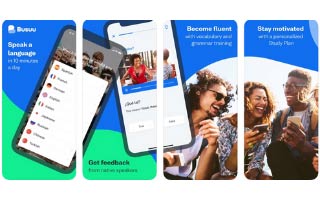
- Separate Spain and Latin American Spanish courses
- Native speakers comment on your written and spoken exercises
- AI conversations and pronunciation practice (Premium Plus)
- No family plan: each account is for one person
- No live tutors included
Yabla is the pick for getting used to fast, informal Spanish: native-speaker videos you can filter by country, slow down and replay.
“The best way here to get used to how people really talk. Pair it with a course or tutor to build speaking.”
- Filter 3,800+ videos by country, including Mexico and Argentina
- Slow, loop and dual subtitles for fast native speech
- Live classes with native teachers on Silver plans and up
- Lighter on structured grammar teaching
- Private classes only on Gold or Platinum plans
Rosetta Stone’s Spanish course includes units on family, friends and home life, taught almost entirely in Spanish.
“Covers family and home topics in a clear sequence. Lighter on grammar explanations and live conversation.”
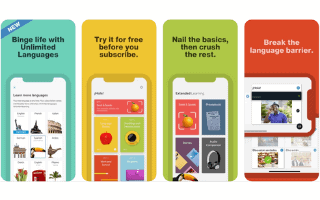
- Units on family, celebrations, friends and household life
- TruAccent speech recognition for pronunciation
- Choose Latin American or Spain Spanish
- Lighter on grammar explanations
- Tutoring costs extra and is US-only
Frequently Asked Questions
How can I practice Spanish with family and friends?
Keep it low-pressure. Let people know you’re learning and ask them to slow down a little, or to use Spanish for part of a meal or a call. Between visits, use an app to learn the words you keep needing — family members, food, plans, how your week went — and listen to real speakers so fast speech gets easier to follow. A tutor can also rehearse specific situations with you, like a first visit to your partner’s family.
I understand Spanish but struggle to speak it. What helps?
Speaking practice matters most. A Preply tutor can work on conversation from your current level, Pimsleur’s lessons ask you to answer out loud, and Busuu’s placement test suggests a starting level so you don’t begin from scratch. None of these apps offers a dedicated course for heritage speakers.
Can my partner and I learn with one subscription?
Babbel’s separate Group Plan lets up to six people learn on their own accounts, including different languages. Pimsleur Premium or All Access can be shared with up to three family members. Busuu says it doesn’t offer a family plan, and we didn’t find shared plans for Yabla or Rosetta Stone. The Babbel individual price shown above is not a Group Plan price.
Do these apps teach Latin American or Spain Spanish?
Babbel has separate European and Mexican Spanish courses, Busuu has separate Spain and Latin American Spanish courses, Rosetta Stone lets you choose Latin America or Spain Spanish, and Pimsleur offers a Latin American course plus a separate Castilian one. Yabla lets you filter videos by country, and Preply lets you filter tutors by Spanish variety or country of birth, so you can practice the Spanish your family and friends actually speak.
How much do Spanish learning apps cost?
Busuu Premium works out to $6.08/month on its 12-month plan, Babbel to $8.07/month on its 12-month plan, and Yabla’s basic plan is $9/month billed yearly. Busuu also has a free basic plan. Yabla also offers a 7-day free trial plus a free private class if you want to try before paying.
Is a tutor better than a self-paced app for learning Spanish?
A tutor like Preply gets you speaking and correcting mistakes faster, but costs more per hour of study than a self-paced app. Many learners pair an app for vocabulary and listening with a few tutor lessons focused on the conversations they actually have.