Advertising Disclosure: This site may earn a commission when you buy through our links, at no extra cost to you. How we rate

Best Apps to Learn Spanish as a Hobby (2026)
Learning Spanish can be as much about following a recipe or enjoying a song as finishing a course. Compare six apps for short lessons, audio stories, subtitled videos and conversations about the things you already enjoy.

Spanish for Your Daily Walk
From $19.95/mo
Visit Site Our Best Choice
Short Lessons, Good Stories
From $8.07/mo
Visit Site
Talk About What You Love
From $3 per lesson
Visit SiteCompado Score9.6ExcellentShort Lessons, Good Stories
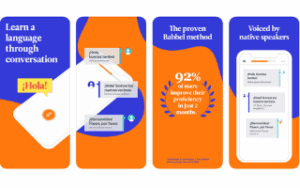
Babbel — Short Lessons, Good Stories
- 10–15-minute lessons for a quiet coffee break10–15-min lessons over a coffee
- Audio mysteries and history podcasts with transcriptsAudio stories, history and transcripts
- Review familiar words or explore a different topicReview words or try a new topic
Compado Score9.4GreatSpanish for Your Daily Walk
Pimsleur — Spanish for Your Daily Walk
- Listen and reply aloud during a 30-minute walk30-min audio lessons for a walk
- Short Minis on culture, grammar and useful phrasesMinis on culture and grammar
- Premium adds quizzes, flashcards and Voice CoachQuizzes and Voice Coach · Premium
Compado Score9.1GreatTalk About What You Love
Preply — Talk About What You Love
- Discuss films, books or food with a tutor you chooseTalk films, books or food with a tutor
- Agree on topics, pace and feedback before you startChoose topics and agree on a pace
- Save new Spanish words to revisit between lessonsReview new words between lessons
 Compado Score8.6Very good
Culture, News and Community
Busuu — Culture, News and Community
- Explore Spanish through El País articles and videosExplore El País articles and videos
- Listen to culture podcasts alongside your lessonsCulture podcasts alongside lessons
- Get community feedback on your Spanish exercisesGet feedback from the community
 Compado Score8.2Very good
Music, Food and Everyday Spanish
Yabla — Music, Food and Everyday Spanish
- Choose clips on music, cooking and local cultureMusic, cooking and culture clips
- Slow down, loop a line and check both subtitlesSlow, loop and read dual subtitles
- Try dictation or review words from what you watchedDictation and vocabulary review
 Compado Score7.9Good
Learn with Pictures and Sound
Rosetta Stone — Pictures and Sound
- Learn vocabulary through images and spoken examplesLearn through pictures and sound
- Practice saying new phrases with TruAccent feedbackTruAccent pronunciation feedback
- Choose Spain or Latin American SpanishSpain or Latin American Spanish
Find a Way to Learn That You Look Forward To
You don’t need an exam or a trip booked to start Spanish. Perhaps you keep looking up song lyrics, enjoy Spanish cinema or simply like figuring out how a language works. The useful question is what you’d willingly come back to next week: a short lesson, a story in your headphones, a video about cooking or a conversation with someone who shares an interest.
The Compado scores below are overall ratings. These reviews look at a separate question: how each service fits learning for pleasure. We use the providers’ published feature descriptions and explain where extras require another plan. Prices and promotions can vary by billing term and checkout.
What We Compare
- Curriculum Structure: whether the lessons give you a clear starting point and explain enough grammar to make sense of new sentences.
- Speaking Practice: the opportunities to answer aloud, check pronunciation or talk with another person.
- Value for Money: what the chosen plan includes, how it renews and whether its commitment suits the time you want to spend.
- Ease of Use: how easily you can find something interesting, return to a lesson and pick up after a break.
Start with the Kind of Practice You Enjoy
- If you like working things out, try a short course lesson with an explanation you can use in your own sentences.
- If you love stories and culture, look for podcasts, music videos or articles that give you a reason to keep listening or reading.
- If you enjoy a good conversation, choose a tutor who is happy to discuss your interests and agree on topics before the lesson.
Three Ways to Start Your Spanish Hobby
Finish a short lesson, then follow a mystery or dip into a history podcast. There’s something to do with the Spanish you’re learning.
- 10–15-minute lessons with dialogue practice and grammar explanations
- Spanish audio stories and podcasts for different listening levels
- Download lessons and revisit vocabulary when you have a quiet moment
- The app subscription does not include a live teacher
- AI speaking practice is a mobile beta; availability varies by language setup
Babbel suits the kind of hobby that starts with a little curiosity and grows into a regular slot in your day. A 10–15-minute lesson gives you dialogue, vocabulary and a grammar explanation to work through. You can revisit a lesson or use vocabulary review when you feel like consolidating what you know. For a change of subject, browse courses on interests such as films and culture.
The audio catalog is a particular draw. Aventura on the Babbel Express is an A2 mystery in which you make choices as the story unfolds. Hoy en el Pasado explores history at B1, while A-Zero to A-Hero is aimed at newcomers. Pick a level you can follow and use the linked transcripts when you lose a phrase. Several podcasts are also available on public podcast platforms, so you can sample them before subscribing.
For speaking practice, Guided Conversations offer scripted exchanges and Babbel Speak provides AI scenarios in the mobile app as a beta. You can use hints or repeat a prompt while you find the words. Access depends on your language setup. Downloadable lessons and podcasts are useful for offline study; the AI feature is not an offline conversation partner.
Best for
Beginners who enjoy a little structure
The main course gives you a place to start. Grammar explanations help you understand the sentences you meet in a podcast or another activity.
People who like a story in their headphones
Try an audio mystery or history episode alongside your lessons. Choose by listening level; the Spanish-only shows can be demanding when you are new.
Not for
Anyone who only wants to browse songs or TV clips
The core subscription is a language course. Yabla puts a searchable video library at the center of the experience.
Learners who want a weekly chat with a teacher
Babbel’s app is for independent study. Choose a separate tutor if conversation with another person is the part you most enjoy.
Babbel FAQ
Can I use Babbel for stories as well as lessons?
Yes. Its Spanish podcasts include a beginner-friendly learning series, an interactive mystery and history episodes. The podcast catalog lists listening levels and links to transcripts for several shows.
Can I fit Babbel into ten or fifteen minutes?
That is the usual length of a course lesson. You can also return to vocabulary review without starting a new topic. Download lessons in the mobile app if you want to study without a connection.
What speaking practice does Babbel offer?
Course exercises include pronunciation practice. Guided Conversations use scripted exchanges, while Babbel Speak offers AI scenarios in the mobile app as a beta. Availability depends on your learning and display languages. These tools are separate from the downloadable lessons and do not replace a live tutor.
Turn a familiar walk into time with Spanish. Listen closely, answer aloud and come back to the phrases that trip you up.
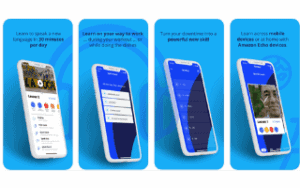
- Core audio lessons work without keeping your eyes on a screen
- Minis add short explanations of grammar, culture and useful phrases
- Premium includes Voice Coach, flashcards, quizzes and Speak Easy role-play
- Core lessons take about 30 minutes and need active responses
- Less emphasis on extended reading and writing; no live tutor included
If you already take a regular walk, Pimsleur gives that half-hour a new use. The recorded lesson asks you a question, leaves a pause and expects you to say an answer. You hear phrases again in later exchanges and try to recall them without looking at a list. It works best somewhere you feel comfortable speaking aloud; simply playing it in the background misses much of the practice.
There are smaller activities when you don’t have time for a full lesson. Minis cover grammar, cultural points and handy phrases. Premium adds flashcards and quick quizzes, Speak Easy for role-playing lesson dialogues, and Voice Coach for pronunciation feedback. Those extras offer variety, but the main route is still a sequence of conversational lessons. If your favorite part of Spanish is reading fiction or following film discussions, add material that serves that interest.
Best for
People who already make time for a walk
Download the core audio in the mobile app and listen somewhere you can answer aloud. You do not need to keep looking at the screen.
Learners who enjoy hearing and repeating phrases
The recurring prompts give you a familiar routine. Premium’s review activities let you return to the words and sounds you want to practice.
Not for
Anyone who only wants a five-minute main lesson
Minis and review activities are shorter, but the core audio lesson is about 30 minutes. Try that format before committing to a subscription.
Readers looking for stories and long texts
Pimsleur includes reading practice, but its emphasis is spoken conversation. It is not a library of novels, articles or audio dramas.
Pimsleur FAQ
Is Pimsleur something I can just listen to?
Listening is part of it, but the lesson also asks you to recall words and reply aloud. Choose a time when you can pay attention and take part. The speaking prompts are the main reason to use this format.
What can I do between the 30-minute lessons?
Minis offer shorter grammar and culture explanations. Premium also includes flashcards, quick quizzes, Speak Easy role-play and Voice Coach pronunciation practice. Check the plan’s features if you are comparing Premium with an audio-only purchase.
Which Spanish course should I choose?
Pimsleur offers Latin American Spanish and a separate Castilian Spanish course. You might choose the variety you hear in your favorite podcasts or films. Either gives you a starting point; you can explore other accents as your listening develops.
Bring something you want to talk about: a film you watched, a dish you cooked or a book you couldn’t put down. Agree on the focus with your tutor.

- Choose a tutor who welcomes conversation about your interests
- Share an article or discuss a film, with feedback as you speak
- Use the classroom’s Spanish vocabulary tools to revisit new words
- An ongoing subscription requires a regular lesson commitment
- Teaching style and subject knowledge vary from tutor to tutor
Preply makes room for the parts of Spanish you can’t predict in an exercise. You might want to explain why you liked a film, compare two recipes or ask about a local festival. Look for a tutor whose introduction mentions conversation or an interest you share, then send a short message explaining what you would enjoy discussing. A tutor who welcomes that approach can shape the lesson around it.
Use the trial to agree on the balance: how much correction you want, whether you enjoy homework and what you’d like to bring next time. The classroom supports notes, shared files and Spanish vocabulary practice, so useful words need not disappear when the call ends. Ongoing lessons use a subscription with one tutor, renewed every 28 days, with a minimum of four lessons per cycle. That suits a regular weekly hobby better than a spontaneous lesson every few months.
Best for
People who enjoy talking through an interest
Ask a prospective tutor whether you can use a short article, a film scene or a topic you choose as the starting point for lessons.
Returning learners who have something to say
Explain what you already understand and where you hesitate. Your tutor can adjust the pace and help you express your own ideas.
Not for
Anyone looking for occasional one-off lessons
After the trial, ongoing learning uses a renewing subscription with at least four lessons every 28 days. Factor that schedule into your budget.
People who want to study whenever the mood strikes
You need to book time with a tutor and follow the cancellation policy. A self-paced app is easier to open for an unplanned ten minutes.
Preply FAQ
Can I choose conversation topics on Preply?
You can ask a tutor to build lessons around your interests. Tell them what you have in mind before booking, whether that is cooking, books or discussing a series. Tutors have different approaches, so agree on the format rather than assuming every lesson will be an open chat.
Can I book just an occasional lesson?
You can start with a trial, but ongoing lessons are sold through a subscription with one tutor. It renews every 28 days and starts at four lessons per cycle. Check the lesson balance and renewal rules before choosing it for an irregular hobby.
Can I review words after the lesson?
Yes. Preply’s Spanish vocabulary tools let you revisit saved words, with definitions, audio and examples. Use a few of those words in your next conversation so the review connects to something you want to say.
Choose the Activity Before You Choose the App
Think of something you already make time for. If it is music, try a short subtitled performance or interview. If it is cooking, follow a clip about a dish and note the verbs you hear. If you like puzzles, a story with clues may hold your attention longer than another vocabulary list. Start with one resource and see whether you want to return to it after the first week.
Make Room for the Things You Are Curious About
Babbel is a useful starting point if you like a short lesson followed by something to listen to. Pimsleur suits a routine with room to listen and answer aloud. With Preply, the attraction is the conversation itself: find a tutor who welcomes your interests and agree on what you will discuss.
The next three options give you more ways to follow an interest: culture and community, subtitled videos, or visual lessons with extra practice tools.
Busuu combines a Spanish course with opportunities to read, listen and hear from other learners. Its catalog includes Learn Spanish with El País, which uses articles and videos, and All about Spanish, a culture-focused podcast course. That gives you something to explore when you want a break from the next grammar lesson. Check access to the particular course in your plan.
Community exercises let you post a short written or spoken response and receive comments from other users. You can return the favor in a language you know. The free plan includes course access and community feedback; Premium adds review tools and offline lessons. AI Conversations and pronunciation feedback belong to Premium Plus after any limited trial. The $6.08/month offer shown here is for Premium.
Read about something happening in the world, listen to a cultural story, then try a few sentences of your own for the community to comment on.
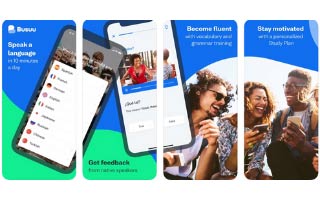
- El País articles and videos in the Spanish course catalog
- Written and spoken exercises with feedback from the community
- Premium adds offline lessons and vocabulary and grammar review
- Unlimited AI Conversations and pronunciation feedback require Premium Plus
- Community corrections are asynchronous, rather than a scheduled live conversation
Yabla is a natural place to start if you already follow Spanish-language music, food or culture. Browse music videos, interviews, television excerpts and cooking clips, then filter by difficulty or country. The catalog includes material on dishes such as Colombian arepas and buñuelos, so you can choose a subject you would have watched anyway.
Open both subtitle tracks, look up an unfamiliar word, slow a sentence or loop it until you can hear where one word ends and the next begins. Scribe turns listening into dictation; Speak lets you practice pronunciation. If choosing a clip takes longer than watching one, the roughly ten-minute Fluency Club routine offers a suggested sequence of activities.
The base subscription includes the video library, learning games and Fluency Club. Silver adds group classes; Gold and Platinum also include private classes. The $9/month annual offer on this page is the base plan, so use its clips and practice tools as the starting point for your comparison.
Choose a clip because it interests you. Replay the line you missed, look up a word and listen again before moving on.
- Music, cooking and culture clips with Spanish and translated subtitles
- Slow playback, looping and word lookup while you watch
- Scribe dictation, Speak pronunciation practice and vocabulary review
- Fast speech can be demanding; beginners should choose easier clips
- The base plan does not include group or private classes
Rosetta Stone teaches through pictures, spoken Spanish and repeated practice. You match what you hear or read to a scene, then try saying the language yourself with TruAccent pronunciation feedback. It is a good format to try if you enjoy spotting patterns and would rather begin with examples than read a long grammar explanation.
The extras depend on the version. Rosetta Stone Classic has Stories for reading, listening and recording your voice, plus Audio Companion for downloadable listening practice. Sapphire has its own learning path, with topics including art, landmarks, sports and exercise. These are different feature sets, so check the version included in the offer.
With an active Sapphire subscription, browser-based Studio can generate a reading guide, adapted text, vocabulary list, flashcards or a matching game around a topic you choose. A set of cooking terms or a short reading activity about art could bring another hobby into your Spanish practice. Sapphire also has themed flashcards and text-based Chat Missions. Do not assume those extras are included in every Rosetta Stone subscription.
Look at the scene, listen to the phrase and try it yourself. Check which version you are buying before choosing it for the extra hobby tools.
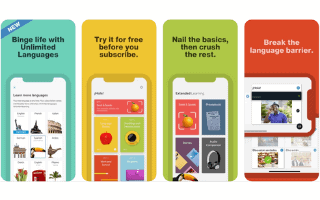
- Visual lessons connect Spanish words with scenes and objects
- TruAccent pronunciation feedback as you practice aloud
- Sapphire Studio can create reading and vocabulary activities around a topic
- Less suited to learners who want detailed grammar explanations
- Sapphire extras require an active Sapphire subscription
Questions About Learning Spanish for Fun
How can I use music or films to practice Spanish?
Start with a short, clear section: a chorus, an interview answer or a minute of dialogue. Listen once for the general idea, check the subtitles or transcript, then replay it. Yabla provides tools for this kind of close listening. You can also ask a Preply tutor to discuss a scene, provided you agree on that lesson format beforehand.
Can I start from zero if I am only learning for pleasure?
Yes. A beginner course gives you useful words and sentence patterns while you find out what you enjoy. Babbel and Busuu offer a clear lesson sequence; Rosetta Stone introduces language through visual examples. Add a simple song, audio story or video when you feel curious. You do not have to understand every word to find it worthwhile.
Do I need to practice every day?
Choose a rhythm you can keep without resenting it. You could do two short lessons during the week and spend a little longer on a video or story on the weekend. If you miss a week, revisit something familiar before starting a new topic. A small goal, such as understanding a chorus or describing a recipe, can give your next session a purpose.
Does it matter which variety of Spanish I learn?
It can help to start with the variety you hear most in the music, films or podcasts you enjoy. Babbel offers European and Mexican Spanish; Pimsleur, Busuu and Rosetta Stone offer options for Spain and Latin America. Yabla lets you browse by country, and Preply lets you choose a tutor with a regional background. You can explore other varieties as you go.
Can I try Spanish without committing to a paid plan?
Busuu has a free course option with community feedback. Babbel offers a free first lesson and publishes several podcasts on public platforms. Yabla has sample videos and free lesson articles, as well as a subscription trial. Use those to see which activity you actually return to before choosing a longer billing term.
Should I use an app or learn with a tutor?
Choose an app if you enjoy independent practice or want to study at unpredictable times. A tutor is useful when talking with another person is part of the attraction, especially if you have a topic you want to discuss. For Preply, budget for the ongoing subscription schedule rather than assuming lessons can be bought individually whenever you feel like one.
Which activities can I use offline?
Babbel lets you download lessons and podcasts in its mobile app. Pimsleur supports downloaded core audio, and Busuu includes offline lessons on Premium and Premium Plus. Download what you need before going out. Live tutoring and online AI conversations still need a connection; downloading a lesson does not make every feature work offline.